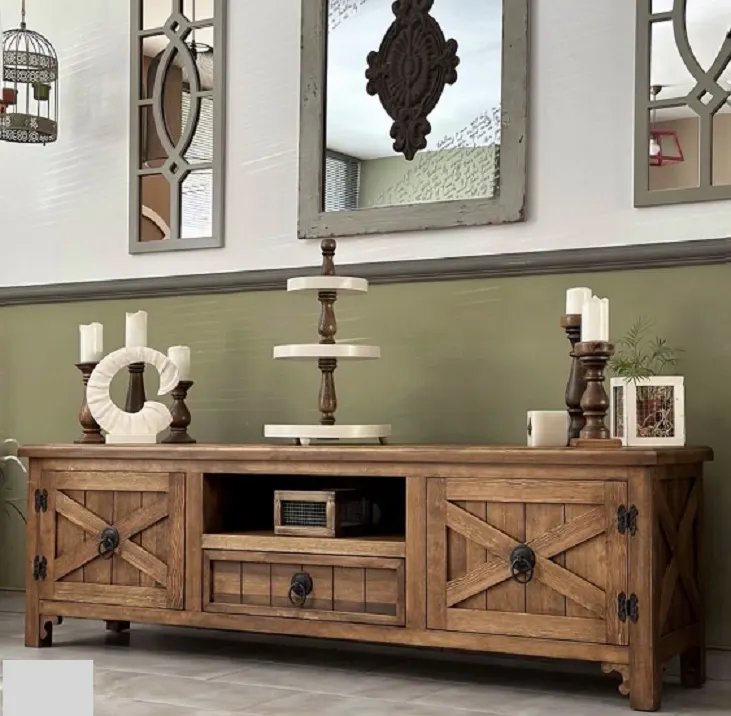
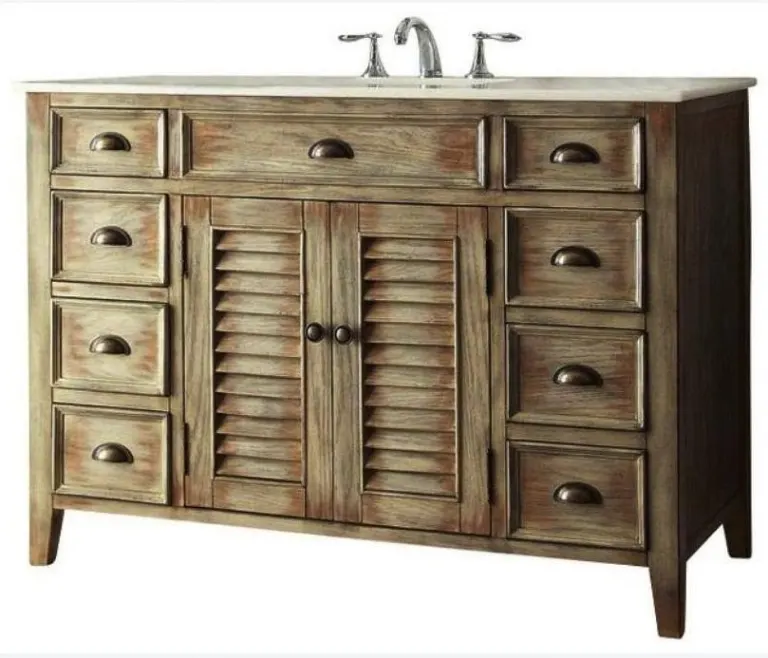
Fluted and Slatted Solid Wood Bathroom Cabinet Models: CNC Milling Geometry, Groove Waterproofing, and Acoustic Wet-Zone Architecture
Architectural millwork has experienced a decisive shift away from flat, featureless slab doors toward tactile, three-dimensional timber facades. Leading this movement are fluted and slatted solid wood bathroom cabinet models, which carve rhythmic vertical flutes, convex tambour reeds, or open architectural slats directly into kiln-dried white oak, walnut, and teak. Beyond creating dramatic play between light and shadow, sculpted timber surfaces diffuse harsh bathroom acoustics and elevate utilitarian storage into bespoke furniture. However, multiplying the surface area of solid wood by 150% to 200% through deep grooves and exposed end-grain channels introduces acute moisture-trapping risks, uneven board-cupping forces, and complex spray-finishing requirements.

This technical guide examines the CNC and spindle-moulder milling geometries, balanced panel construction, groove-sealing fluid dynamics, edge-pull ergonomics, and grazing lighting principles behind fluted and slatted solid wood bathroom cabinet models.
1. Profile Taxonomy: Fluted, Reeded, Tambour, and Open-Slatted Facades
Although frequently grouped together in interior design catalogs, fluted and slatted solid wood bathroom cabinet models encompass four distinct joinery profiles—each with unique structural behaviors and water-shedding characteristics.
Profile Architecture Cross-Section Geometry Groove Depth & Pitch Moisture Retention Risk Best Structural Application
Fluted (Concave Grooves) Semi-circular or elliptical concave channels carved into solid timber 3–6 mm deep; 12–25 mm center-to-center Low to Moderate (smooth curved valleys shed droplets) Flat drawer fronts, vertical linen tower doors, curved vanity ends
Reeded (Convex Beads) Rounded half-round convex ridges projecting outward 4–8 mm profile height; 10–20 mm pitch Moderate (sharp V-valleys between reeds hold soap residue) Mid-century modern vanities, framed Shaker insert panels
Tambour (Flexible Slats) Individual narrow solid wood strips bonded onto heavy canvas or marine mesh 2–4 mm reveal gap between 12–18 mm slats High if unsealed (fabric backing wicks steam) Curved radius-corner floating vanities, roll-top appliance garages
Architectural Slatted (Open Batten) Individual solid timber battens mounted over a dark waterproof substrate 8–15 mm deep battens with 6–12 mm dark shadow gaps Moderate-High (requires pre-finishing all 4 sides of every slat) Contemporary spa vanities, ventilated laundry hamper doors
2. Structural Engineering: Preventing Board Cupping After Deep Milling
Carving parallel longitudinal grooves into one face of a solid hardwood board disrupts internal timber tension. When wood fibers are removed exclusively from the front face of a panel, the uncut rear face retains greater cross-grain strength and moisture-absorption surface area—causing unreinforced doors to cup backward or forward within weeks of exposure to bathroom steam.
Master cabinetmakers engineer fluted and slatted solid wood bathroom cabinet models using three anti-warp stabilization protocols:
1. Balanced Rear Relief Kerfs (Counter-Grooving): When milling solid 22mm–25mm hardwood boards directly, craftsmen cut shallow longitudinal stress-relief kerfs (3–4 mm deep) into the hidden rear face of the door panel. Equalizing surface tension and vapor-exchange area across both faces keeps the door dead-flat across seasonal humidity swings.
2. Thick Solid Hardwood Laminated Over Marine Plywood Cores: For wide drawer fronts (90 to 120 cm) where long-span flatness is critical, builders laminate a 6mm to 8mm solid rift-sawn white oak or walnut face layer onto a 16mm marine-grade Baltic birch plywood substrate, balanced on the rear face with a 3mm matching hardwood backer veneer. The CNC router carves the 4mm flutes strictly within the thick solid-wood face layer without exposing the underlying plywood plies.
3. Pre-Finished Individual Battens for Slatted Doors: On open-slatted fluted and slatted solid wood bathroom cabinet models, each solid hardwood batten is milled, sanded, and spray-sealed on all four sides before being mechanically fastened from behind with 316 stainless steel screws onto a black-lacquered HMR-MDF or compact-laminate backing panel. Pre-finishing eliminates raw, unsealed wood inside narrow shadow gaps where spray guns cannot reach.
3. Groove Waterproofing and Spray-Finishing Fluid Dynamics
Standard roller or brush application fails catastrophically on fluted and slatted solid wood bathroom cabinet models, leaving thick puddles of finish inside concave valleys while starving raised ridges of protection.
• Multi-Angle HVLP / Air-Assisted Airless Atomization: Finishers apply low-viscosity two-component (2K) catalyzed matte polyurethane at oblique 45-degree spray angles—first sweeping upward from the left, then downward from the right—so atomized resin droplets coat both sidewalls and the root of every groove evenly without bridging or bubbling.
• De-Nibbing with Abrasive Nylon Bristle Brushes: Between coats, flat sandpaper cannot reach inside 5mm concave flutes without rounding over crisp ridge peaks. Workshops use flexible 320-grit silicon-carbide abrasive flap wheels or contoured foam pads to scuff-sand grooves uniformly while preserving razor-sharp geometric definition.
• Horizontal Top-Edge Water Shedding: On base cabinet drawers positioned directly beneath a countertop overhang, vertical flutes terminate at the top edge of the drawer front. If water drips off the counter lip onto exposed horizontal flute channels, moisture pools inside the concave troughs. Architectural fluted and slatted solid wood bathroom cabinet models either cap the top of fluted doors with a solid 8mm horizontal hardwood rail or machine a 15-degree downward-sloping chamfer across the top edge so water sheds immediately forward onto the floor rather than sitting in end-grain grooves.
4. Ergonomic Hardware and Integrated Handle Engineering
Attaching traditional surface-mounted knobs or bar pulls onto undulating fluted or reeded doors causes hardware bases to rock unevenly across ridges and visually interrupts the vertical rhythm of the timber.
• Recessed Aluminum J-Pull or Solid Wood Edge Channels: Integrating a continuous anodized aluminum profile (in brushed brass, matte black, or bronze) or a machined solid-wood finger recess along the top edge of drawers preserves an unbroken vertical fluted facade.
• Concealed Touch-Latch (Push-to-Open) Runners: Pairing heavy-duty undermount slides with integrated mechanical push-to-open dampers (such as Blum TIP-ON Blumotion) eliminates exterior hardware completely—allowing users to open drawers with a gentle knee or hip press when hands are wet.
• Curved Radius Corner Joinery: One of the signature advantages of fluted and slatted solid wood bathroom cabinet models is the ability to wrap vertical tambour or CNC-milled flexible hardwood panels smoothly around 50mm to 100mm radius curved vanity corners. Curved corners eliminate sharp hip-height edges in compact bathrooms while accentuating the sculptural continuity of the vertical fluting.
5. Grazing Light Physics: Highlighting Dimensional Relief
Overhead ceiling downlights positioned in the center of a bathroom fail to illuminate vertical cabinet fronts effectively. To bring out the architectural depth of fluted and slatted solid wood bathroom cabinet models, lighting must graze parallel to the textured surface:
1. Under-Counter Shadow-Gap LED Grazing: Recessing a narrow 10mm extruded aluminum channel with a 30-degree asymmetric lens underneath the stone countertop lip directs warm 2700K–3000K CRI 90+ light straight down across the vertical flutes, casting crisp micro-shadows inside every groove.
2. Vertical Mirror-Side Wall Sconces: Flanking the vanity mirror with vertical tubular sconces throws cross-directional light onto upper fluted linen cabinets, accentuating natural oak or walnut grain relief throughout the room.
6. Hygiene and Dust Management in Wet Environments
A common homeowner concern regarding fluted and slatted solid wood bathroom cabinet models is dust and toothpaste accumulation inside vertical grooves. Following three specification guidelines keeps maintenance effortless:
• Prefer Vertical Orientation Over Horizontal Fluting: Vertical flutes shed water droplets downward via gravity and collect minimal airborne dust compared to horizontal grooves, which act like microscopic shelves.
• Specify Gentle U-Shaped Flutes Over Deep V-Grooves: Broad, shallow concave flutes (e.g., 16mm width by 3.5mm depth) wipe clean effortlessly with a damp microfiber cloth, whereas narrow, deep 90-degree slots trap dried soap residue.
• Dead-Matte Anti-Static Topcoats: Cured two-component polyurethane finishes eliminate static charge buildup on wood surfaces and repel toothpaste splatters so routine cleaning requires only warm water and a soft cloth.