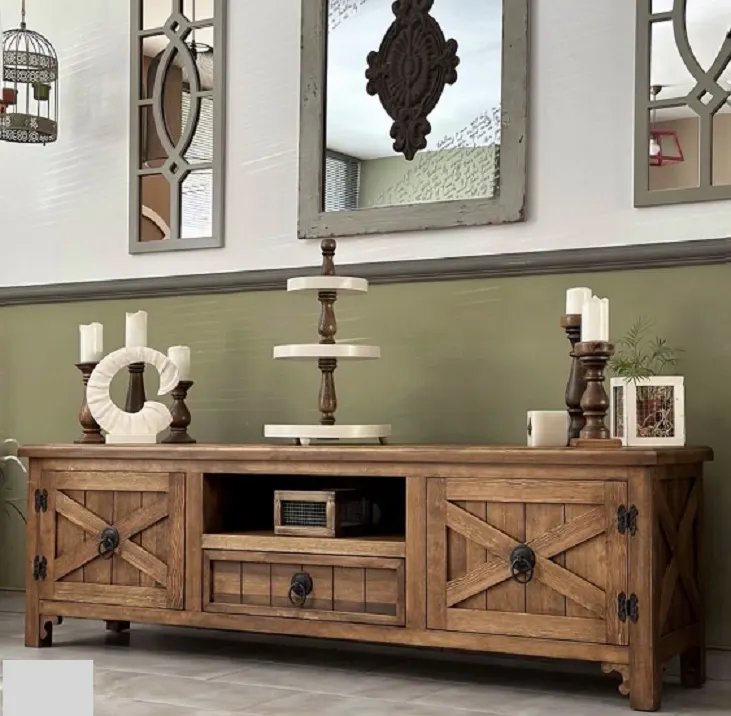
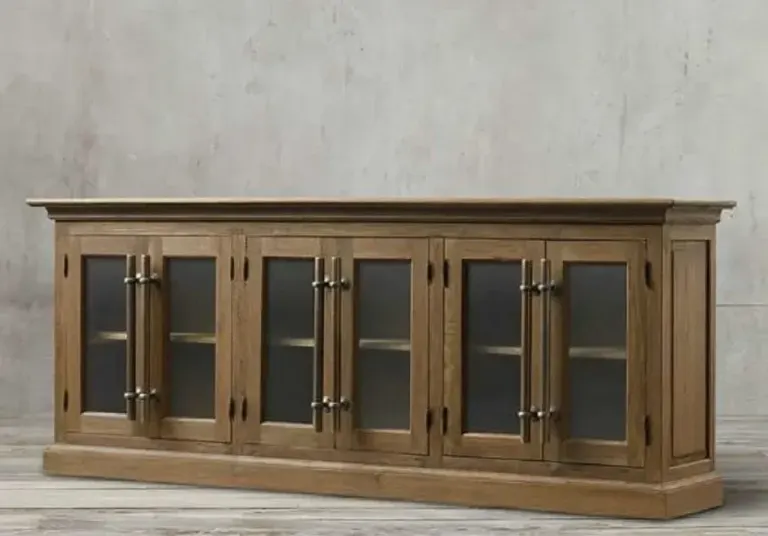
Regulatory Compliance, EUDR Traceability, and Customs Regimes for Distressed Solid Wood Console Furniture in Turkey: Navigating TAREKS, KKDİK, and Global Timber Laws
Navigating the legal and technical architecture of Regulatory Compliance, EUDR Traceability, and Customs Regimes for Distressed Solid Wood Console Furniture in Turkey has become the decisive factor separating profitable cross-border furniture enterprises from shipments stranded in customs demurrage.

As global environmental enforcement tightens—led by the European Union Deforestation Regulation (EUDR), the United States Lacey Act, and Turkey’s own KKDİK chemical safety framework—exporting and importing distressed solid wood consoles is no longer merely a logistics exercise. It is an exacting discipline of botanical chain-of-custody verification, volatile organic compound (VOC) laboratory testing, and customs regime engineering.
Whether a Turkish manufacturer in İnegöl or Ankara is shipping hand-distressed Anatolian oak consoles to Rotterdam and New York, or an Istanbul luxury design house is importing European designer consoles and North American black walnut lumber, strict adherence to statutory documentation is mandatory. This comprehensive legal-technical manual details every regulatory mechanism, customs optimization scheme, and compliance protocol governing Regulatory Compliance, EUDR Traceability, and Customs Regimes for Distressed Solid Wood Console Furniture in Turkey.
1. The EU Deforestation Regulation (EUDR) and Turkish Solid Wood Exporters
For Turkish manufacturers and international buyers operating within Regulatory Compliance, EUDR Traceability, and Customs Regimes for Distressed Solid Wood Console Furniture in Turkey, the European Union Deforestation Regulation (Regulation (EU) 2023/1115) represents the most transformative trade compliance shift in modern furniture history. Because wooden furniture classified under HS Chapter 94 (specifically 9403.60) falls directly within the scope of EUDR-regulated timber commodities, every distressed solid wood console entering the 27 EU member states from Turkey must be demonstrably deforestation-free and legally harvested.
Mandatory Geolocation & Due Diligence Data Requirements
Under the EUDR framework, Turkish exporters must supply their EU import partners (Operators) with granular supply-chain datasets prior to customs clearance in Europe:
• Polygon & Coordinate Geolocation: Exact latitude and longitude coordinates of the specific forest plots (orman bölmeleri or private concessions) where the oak, pine, beech, or walnut timber was harvested. For plots exceeding four hectares, full polygon boundary coordinates are mandatory.
• Cutoff Date Verification: Documentary proof that the land from which the console timber originated was not subject to deforestation or forest degradation after December 31, 2020.
• Harvesting Date & Species Identification: Exact botanical genus and species names alongside documented felling dates and regional forestry transport permits (nakliye tezkeresi issued by Turkey’s General Directorate of Forestry – Orman Genel Müdürlüğü (OGM), or equivalent third-country timber legality permits).
• Due Diligence Statement (DDS) Reference Numbers: When Turkish factories construct distressed consoles using European oak previously imported from Romania, Croatia, or Germany, they must capture the original EU Due Diligence Statement reference numbers from their timber suppliers and pass those reference codes downstream into the final export dossier.
Strategic Role of FSC and PEFC Chain-of-Custody Certification
While third-party sustainability certifications do not legally replace an EUDR Due Diligence Statement, maintaining active FSC (Forest Stewardship Council) or PEFC (Programme for the Endorsement of Forest Certification) Chain-of-Custody (CoC) certification drastically streamlines risk mitigation under Regulatory Compliance, EUDR Traceability, and Customs Regimes for Distressed Solid Wood Console Furniture in Turkey. Certified Turkish sawmills and console factories maintain segregated batch tracking from rough log intake through kiln drying, CNC milling, and distressing, providing auditable invoice-to-forest traceability that satisfies strict European retail compliance departments.
2. North American & UK Timber Legality Frameworks: US Lacey Act & UKTR
When distressed solid wood console furniture leaves Turkish ports (Gemlik, Ambarlı, İzmir, Mersin) bound for non-EU Western markets, exporters and importers must satisfy distinct statutory timber legality regimes.
United States Lacey Act (PPQ Form 505) Compliance
Under the US Lacey Act amendments, it is a federal offense to import wooden furniture into the United States without an accurate electronic plant and wood product declaration (PPQ Form 505) filed via the Automated Commercial Environment (ACE) portal:
• Botanical Precision: Generic trade names such as "Turkish Oak," "Anatolian Pine," or "Rustic Hardwood" are legally invalid and trigger immediate US Customs and Border Protection (CBP) holds. Every structural and decorative wooden component—including hidden drawer boxes, rear panels, and corner glue blocks—must be declared by exact Latin genus and species (e.g., Quercus petraea, Pinus brutia, Fagus orientalis, or Betula pendula for Baltic birch drawer bottoms).
• Country of Harvest Attribution: If a Turkish factory builds a console tabletop from American black walnut (Juglans nigra) imported from Pennsylvania and pairs it with Turkish steamed beech (Fagus orientalis) legs, the Lacey Act declaration must itemize both species separately with their respective countries of harvest (USA and Turkey), exact board-foot/kilogram quantities, and component values.
United Kingdom Timber Regulation (UKTR)
Following Brexit, distressed solid wood consoles exported from Turkey to Great Britain must comply with the UK Timber Regulation (UKTR) (while Northern Ireland remains aligned with EU EUDR rules under the Windsor Framework). UK importers acting as "Operators" placing Turkish furniture onto the GB market for the first time must execute a documented Due Diligence System (DDS) verifying compliance with Turkish forestry laws, supported by OGM harvesting licenses, sawmill purchase invoices, and EUR.1 preferential origin documentation under the UK-Turkey Free Trade Agreement.
3. Turkish Import Compliance: TAREKS Inspections and KKDİK Chemical Safety
For companies importing finished distressed solid wood consoles, antique wood furnishings, or surface-finishing chemicals into Turkey, Regulatory Compliance, EUDR Traceability, and Customs Regimes for Distressed Solid Wood Console Furniture in Turkey centers on the Ministry of Trade’s digital risk-auditing infrastructure.
Navigating TAREKS (Risk-Based Control System in Foreign Trade)
Every commercial import declaration under GTİP 9403.60 undergoes automated risk profiling in TAREKS (Dış Ticarette Risk Esaslı Kontrol Sistemi). When a shipment is flagged for documentary or physical inspection—especially common for non-EU imports or high-value designer consoles—importers must submit accredited laboratory test reports proving compliance with Turkish Product Safety and Technical Regulations Law (No. 7223):
1. Formaldehyde Emission Limits (TS EN 717-1 / EN 16516): Any composite wood sub-components used in console drawers, backboards, or distressed veneered substrates must strictly meet E1 emission standards (≤ 0.124 mg/m³ air chamber limit).
2. Heavy Metal Migration (TS EN 71-3): Surface coatings, distressed glazes, reactive stains, and antiquing waxes must be verified free from restricted levels of lead, cadmium, chromium VI, mercury, and arsenic.
3. Phthalate & Plasticizer Restrictions: If distressed consoles incorporate faux-leather drawer liners, polymer caster wheels, or PVC edge trimmings, laboratory testing must confirm phthalate concentrations remain below 0.1% by mass.
KKDİK (Turkish REACH) Chemical Registration Obligations
Turkey’s KKDİK Regulation (Kimyasalların Kaydı, Değerlendirilmesi, İzni ve Kısıtlanması), harmonized with EU REACH, governs chemical substances imported on their own, in mixtures (such as imported Italian wood stains, hardwax oils, and catalyzed lacquers used by Turkish furniture factories), or intentionally released from articles. Importers bringing specialized European distressing waxes, patina glazes, or wood adhesives into Turkey must ensure all constituent chemical substances exceeding one metric ton annually are pre-registered/registered in the Ministry of Environment, Urbanization and Climate Change’s KKS (Chemical Registration System) by an appointed Only Representative (Tek Temsilci).
4. Customs Regime Engineering: Inward Processing (DİR) & Bonded Warehousing
Strategic utilization of Turkish customs regimes dramatically lowers working capital requirements for manufacturers engaged in Regulatory Compliance, EUDR Traceability, and Customs Regimes for Distressed Solid Wood Console Furniture in Turkey.
Inward Processing Regime (Dahilde İşleme Rejimi – DİR)
Many premier Turkish console manufacturers import kiln-dried North American black walnut, European white oak, high-grade brass hardware, and low-VOC Italian topcoats to craft high-end distressed consoles for global export. Under the Inward Processing Regime (DİR):
• Full Fiscal Suspension: Approved Turkish manufacturers obtain an Inward Processing Authorization Certificate (Dahilde İşleme İzin Belgesi – DİİB) from the Ministry of Trade, allowing them to import raw timber, veneers, and finishing chemicals with 0% Customs Duty, 0% Additional Customs Duty (İGV), and 0% Import VAT (KDV), bypassing the 6% KKDF credit surcharge as well.
• Yield & Waste Calculation (Fire Oranı): Because distressed solid wood console production involves planing, cross-cutting, knot removal, and wire-brushing, raw timber undergoes substantial volumetric loss (typically 28% to 42% waste/offcut factor depending on lumber grade—FAS vs. No. 1 Common). The DİİB explicitly accounts for these technical wastage ratios based on Chamber of Industry capacity reports, ensuring exporters are not penalized for wood shavings and offcuts when reconciling raw material imports against finished console exports.
• Equivalence Principle (Eşdeğer Eşya): Factories can utilize existing domestic stocks of equivalent timber to fulfill urgent export orders immediately, and subsequently replenish their inventory via duty-free raw timber imports once the export customs declaration closes.
Customs Bonded Warehouses (Antrepo) for Regional Distribution
International furniture brands using Istanbul or İzmir as a regional distribution hub for the Middle East, Balkans, and Central Asia frequently utilize Type A or Type C Customs Bonded Warehouses (Genel/Özel Antrepo). Distressed solid wood consoles imported from Italy or Spain can be stored in a Turkish bonded warehouse without triggering Turkey’s protective 25%–50% Additional Customs Duty (İGV) or 20% KDV, and subsequently re-exported to Dubai, Doha, Baku, or Almaty under transit customs procedures.
5. Phytosanitary Border Protocols: ISPM 15, Bark Removal, and Fumigation
Solid wood furniture—particularly heavily distressed, rustic, or "live-edge" console tables—attracts heightened scrutiny from agricultural quarantine authorities worldwide. A single undetected wood-boring beetle larva (Cerambycidae or Bostrichidae) can cause an entire 40-foot container to be rejected or incinerated at destination.
Strict Separation of Packaging Compliance vs. Product Compliance
1. ISPM 15 Certification for Packaging & Dunnage: Every wooden pallet, crate frame, corner block, and container bracing plank used in Turkish exports or imports must be constructed from debarked wood treated via Heat Treatment (HT) (core temperature ≥ 56°C for ≥ 30 minutes) at a facility licensed by the Turkish Ministry of Agriculture and Forestry, bearing the legible, permanent IPPC wheat stamp on at least two opposite faces.
2. Elimination of Residual Bark on "Rustic/Live-Edge" Consoles: Distressed solid wood consoles designed with natural live edges or rough-sawn aprons must be 100% free of residual bark and cambium layers, as bark harbors dormant forest pests. Kiln-drying to 8%–10% moisture content inherently sterilizes wood against insects; however, exporters shipping live-edge consoles to strict quarantine jurisdictions (such as Australia’s DAFF, New Zealand’s MPI, or US USDA-APHIS) should accompany the shipment with a Kiln-Drying Certificate and an official Phytosanitary Certificate (Bitki Sağlık Sertifikası) issued prior to vessel departure.
6. Comparative Compliance Matrix Across Major Trade Corridors
Compliance Parameter Turkey → European Union Turkey → United States EU / Non-FTA → Turkey (Import)
Primary Tariff Instrument A.TR Movement Certificate (0% Customs Duty) Certificate of Origin (MFN 0%–1% under HTS 9403.60) A.TR (EU: 0% Duty) vs. Non-FTA (MFN + 25%–50% İGV + 20% KDV)
Timber Legality Mandate EUDR (Polygon/GPS geolocation + post-2020 deforestation-free DDS) US Lacey Act (PPQ Form 505 botanical genus/species + country of harvest) Turkish Customs & OGM timber origin documentation; DİİB for re-export inputs
Chemical & VOC Standards EU REACH, E1 Formaldehyde, EN 71-3 Heavy Metals US TSCA Title VI / CARB Phase 2 (composite drawer parts), CPSIA lead limits TAREKS Inspection + KKDİK (Turkish REACH) chemical & E1 compliance
Mechanical Safety Rules EN 14749 stability & anti-tip wall-restraint kit mandatory ASTM F2057 stability & permanent tip-over restraint kit mandatory TS EN 14749 & Turkish Consumer Product Safety Law No. 7223
Phytosanitary Requirement ISPM 15 HT stamp on pallets/crates; bark-free finished wood ISPM 15 HT stamp on packaging; USDA-APHIS bark-free inspection ISPM 15 HT stamp mandatory; Agricultural Quarantine inspection at Turkish ports
7. Audit-Proof Documentation Checklist for Cross-Border Console Shipments
To guarantee zero-delay customs clearance in Regulatory Compliance, EUDR Traceability, and Customs Regimes for Distressed Solid Wood Console Furniture in Turkey, compliance officers should assemble a standardized master export/import binder for every container movement:
• Master Commercial & Packing Dossier: Bilingual commercial invoice detailing exact 12-digit GTİP / 10-digit HTS/CN codes, net wood weight vs. metal/stone component weight, unit dimensions, and packing list mapped to container seal number.
• Origin & Preferential Tariff Certificates: Original wet-stamped or digitally verified A.TR, EUR.1, or Chamber of Commerce Certificate of Origin.
• Botanical & Geolocation Traceability File: Sawmill invoices, OGM forestry transport permits (nakliye tezkeresi), FSC/PEFC Chain-of-Custody claim codes, and GPS/polygon harvest coordinates formatted for EUDR Due Diligence Statements or US Lacey Act PPQ 505 filings.
• Technical & Chemical Laboratory Certificates: Kiln-drying batch moisture log (confirming 8%–10% MC), accredited lab test reports for E1 formaldehyde and EN 71-3 heavy-metal compliance, and Safety Data Sheets (SDS) for all stains, glues, and topcoats.
• Phytosanitary & Safety Verification: ISPM 15 heat-treatment certificate for wooden crating/pallets, plus verification that anti-tip wall anchoring kits and multilingual assembly/warning manuals are packed inside every retail carton.
8. Frequently Asked Questions (FAQ)
Does EUDR apply to distressed solid wood consoles made in Turkey using imported American oak or walnut?
Yes. Under the EU Deforestation Regulation, any regulated wooden product (including HS 9403 furniture) placed on the EU market is subject to full geolocation traceability regardless of where the timber was originally felled. If a Turkish factory builds a console using American black walnut or Romanian oak, it must obtain the exact forest harvest coordinates and legality documentation from its North American or European lumber supplier and transmit that data to the EU buyer.
How can an importer avoid paying Turkey’s 25%–50% Additional Customs Duty (İGV) when bringing solid wood consoles into Turkey?
Turkey’s Additional Customs Duty (İlave Gümrük Vergisi - İGV) applies based on the non-preferential country of origin of the furniture. Consoles genuinely manufactured in the European Union (accompanied by an A.TR certificate and supplier’s origin declaration) or in countries with an active Turkish Free Trade Agreement—such as the UK, South Korea, or EFTA states (accompanied by valid origin proof)—are exempt from İGV. Alternatively, goods brought into a Turkish customs bonded warehouse (antrepo) for re-export to third countries do not incur İGV.
Are anti-tip wall brackets legally required when exporting narrow solid wood consoles to the US and Europe?
Yes. Because console tables have a narrow footprint (often 30–40 cm deep) and relatively tall profiles (75–90 cm high), they pose tip-over hazards—especially when equipped with storage drawers. Both ASTM F2057 in the United States and EN 14749 in the European Union and UK require manufacturers to supply heavy-duty wall-anchoring restraint kits, installation instructions, and permanent warning labels inside the packaging.
What happens if a shipment of distressed consoles imported into Turkey fails TAREKS chemical testing?
If TAREKS laboratory testing detects formaldehyde emissions exceeding E1 thresholds or restricted heavy metals in distressed surface glazes, customs clearance is permanently denied. The importer must either re-export the non-compliant furniture back to the country of origin (mahrecine iade) at their own expense or pay for supervised environmental destruction, incurring substantial port demurrage and storage fees during the process.