Mastering Solid Wood TV Unit Manufacturing, Import, and Export in Turkey: The Definitive B2B Supply Chain, Timber Engineering, and Global Trade Manual
Mastering Solid Wood TV Unit Manufacturing, Import, and Export in Turkey requires an integrated command of Anatolian woodworking clusters, hygroscopic timber engineering, customs union tariff mechanisms, and international logistics protocols. Over the past decade, Turkey has transformed from a regional furniture producer into a top-tier global manufacturing powerhouse, shipping solid wood living room furniture to more than 190 countries. For international retail buyers, contract hospitality procurement directors, architectural millwork importers, and Turkish export executives, understanding the operational mechanics behind Mastering Solid Wood TV Unit Manufacturing, Import, and Export in Turkey provides a decisive competitive advantage in unit economics, lead-time agility, and product durability.
1. Macroeconomic Architecture of the Turkish Solid Wood Furniture Sector
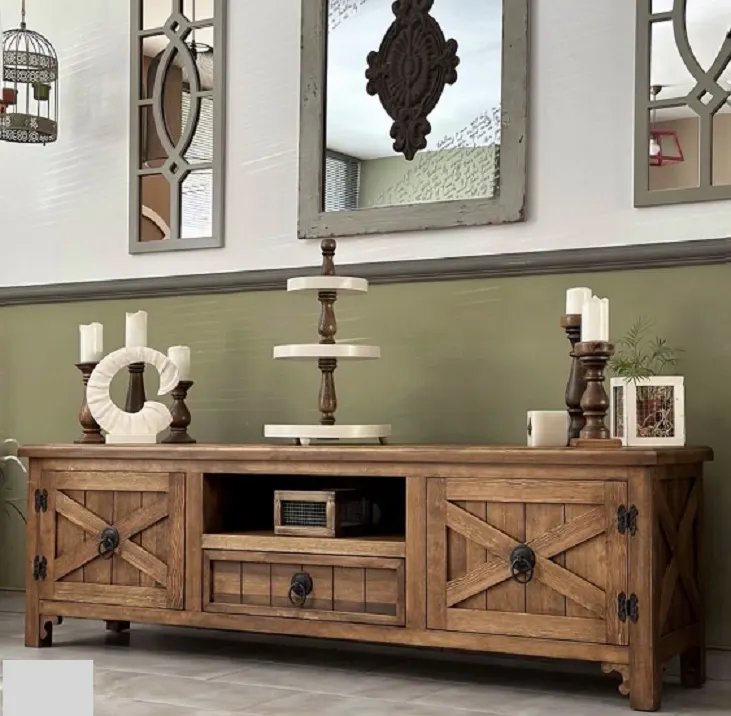
The Turkish furniture industry operates as one of the country’s highest value-added manufacturing verticals, consistently generating billions of dollars in annual export volume with a high domestic value-addition ratio (exceeding 80% for locally sourced timber lines). Within this ecosystem, solid wood TV units—encompassing low-profile media credenzas, cantilevered wall consoles, slatted acoustic entertainment centers, and modular living room units—occupy a premium, margin-resilient tier.
Unlike flat-pack melamine-faced chipboard (MFC) or medium-density fiberboard (MDF) furniture, which competes in hyper-commoditized price brackets, Mastering Solid Wood TV Unit Manufacturing, Import, and Export in Turkey revolves around structural longevity, tactile natural grain, heirloom-grade joinery, and bespoke dimensional adaptability.
Strategic Pillars Driving Global Buyer Migration to Turkey
1. Geostrategic Nearshoring & Speed-to-Market: Positioned at the nexus of Europe, the Middle East, North Africa (MENA), and Central Asia, Turkish factories deliver overland full-truckload (FTL) shipments to Germany, France, the Benelux region, and the UK within 4 to 8 days. By comparison, maritime container freight from Vietnam, Malaysia, or China requires 35 to 55 days, tying up importer working capital and exposing retailers to seasonal inventory stockouts.
2. The EU–Turkey Customs Union Advantage: Industrial goods—including solid wood furniture classified under Harmonized System (HS) heading 9403—enter all 27 European Union member states with 0% customs duty when accompanied by an endorsed A.TR Movement Certificate.
3. Flexible Minimum Order Quantities (MOQs) & SKU Consolidation: Whereas East Asian mega-factories enforce strict multi-container MOQs per SKU, Turkish manufacturers routinely execute mixed-container orders (combining TV units, dining tables, sideboards, and coffee tables) as well as low-batch architectural and hospitality runs.
4. Mature Tier-1 Hardware & Finish Supply Ecosystem: Global leaders in architectural hardware (Blum, Hettich, Häfele, Grass) and industrial wood coatings (ICA, Renner, AkzoNobel, Rubio Monocoat) operate direct distribution hubs inside Turkey’s primary furniture zones, ensuring immediate availability of European-spec components.
2. Geographic Mapping of Turkey’s Furniture Manufacturing Clusters
A foundational pillar of Mastering Solid Wood TV Unit Manufacturing, Import, and Export in Turkey is matching product specifications and order volumes to the exact regional cluster engineered for that production model. Turkey’s woodworking industry is not monolithic; it is organized into highly specialized industrial ecosystems.
Industrial Cluster Core Manufacturing Profile Automation & Machinery Level Primary Wood Species Processed Optimal B2B Buyer & Project Type
İnegöl (Bursa) High-efficiency series production, modular solid wood living room lines, export OEM/ODM High (5-axis CNC nesting, robotic sanding, automated UV spray lines) Anatolian Beech, European Oak, Ash, Pine National retail chains, omnichannel e-commerce brands, volume wholesalers
Siteler (Ankara) Artisanal hand-joinery, bespoke luxury consoles, custom sizes, intricate detailing Low-to-Medium (Precision sliding table saws, spindle molders, master hand-finishing) Turkish Walnut, American Black Walnut, Iroko, Teak Luxury interior design studios, boutique hotels, high-end showrooms
Istanbul (Masko, Modoko, İkitelli, Tuzla) Architectural contemporary designs, mixed-media units (solid wood + marble, brass, fluted glass) Medium-to-High (Hybrid CNC and bespoke metal/stone/glass integration workshops) Walnut, Oak, Ash, Smoked Oak, Exotic Hardwoods International hospitality procurement groups, flagship luxury retailers
İzmir & Aegean Basin Minimalist, coastal, and Scandinavian-inspired solid wood units; port-centric consolidation Medium-to-High (Export-focused assembly and container stuffing facilities) Oak, Chestnut, Pine, Imported North American Hardwoods North American, UK, and Mediterranean maritime importers
Bolu & Düzce Upstream timber milling, industrial kiln drying, finger-jointed & full-stave solid panels High (Computerized drying kilns, automated finger-jointing & hydraulic presses) Anatolian Beech, Hornbeam, Fir, Pine, Oak Domestic factories and international importers of semi-finished wood panels
Kayseri Large-scale integrated furniture manufacturing (historically upholstery/panel, expanding into solid wood accents) Very High (Vertically integrated industrial campuses) Beech, Pine, Oak Mass-market regional distributors across MENA and Eastern Europe
Operational Contrast: İnegöl vs. Siteler
• İnegöl (The Industrial Export Engine): Located in Bursa province, İnegöl operates as a hyper-concentrated furniture city where sawmills, kiln operators, glass temperers, metal powder-coaters, and packaging manufacturers sit within a 15-kilometer radius. Factories here excel at repeatable tolerances (±0.5 mm via CNC machining), rapid container turnaround, and standardized export documentation.
• Siteler (The Bespoke Craftsmanship Hub): Encompassing thousands of specialized workshops in Ankara, Siteler is the epicenter of traditional Turkish cabinetmaking (marangozluk). Master artisans (ustalar) hand-select timber boards to achieve continuous grain-matching (book-matching or slip-matching) across consecutive drawer fronts and cabinet doors—a detail impossible to replicate on fully automated lines.
3. Wood Science & Technical Engineering for Solid Wood TV Units
Solid wood is an anisotropic, hygroscopic biomaterial. Because its cellular structure absorbs and releases atmospheric moisture until reaching Equilibrium Moisture Content (EMC), improperly engineered solid wood TV units will warp, cup, twist, split, or experience joint failure once exposed to residential HVAC systems. Technical excellence in Mastering Solid Wood TV Unit Manufacturing, Import, and Export in Turkey depends on rigorous wood science protocols.
A. Commercial Timber Species & Structural Suitability
Timber Species Botanical Name Janka Hardness (lbf) Avg. Density (kg/m³) Dimensional Stability Aesthetic & Finishing Characteristics
Turkish Walnut Juglans regia ~1,220 640 – 680 High Deep chocolate-brown heartwood with dramatic dark figuring; finishes to a velvety luster with oil or matte lacquer.
American Black Walnut Juglans nigra ~1,010 610 – 660 High Uniform purplish-brown heartwood; preferred by North American and EU luxury buyers for consistent color grading.
European / Anatolian Oak Quercus robur / Q. petraea ~1,120 – 1,360 670 – 720 Medium-High Prominent open grain and medullary rays; responds exceptionally well to wire-brushing, fuming, and cerusing.
Anatolian Beech Fagus orientalis ~1,300 680 – 720 Low-Medium (Requires strict kiln conditioning) Pale cream-to-pinkish uniform grain; absorbs stain evenly to mimic walnut or teak at competitive price tiers.
European Ash Fraxinus excelsior ~1,320 670 – 710 Medium Bold, cathedral-like grain patterns; high elasticity; dominant choice for Japandi and Nordic slatted TV consoles.
Iroko Milicia excelsa ~1,260 640 – 670 Very High Golden-to-rich brown tropical hardwood with high natural oil content; ideal for humid coastal climates.
B. Kiln Drying & Moisture Content (MC) Engineering
Controlling moisture content before a single board enters the milling line is the primary determinant of structural survival:
1. Destination-Specific MC Targets:
• Temperate Europe & North America (Heated/Cooled Interiors): 8% – 10% MC.
• Arid Middle East & Gulf Cooperation Council (GCC) Markets: 7% – 9% MC.
• High-Humidity Coastal Zones: 10% – 12% MC.
2. Computerized Kiln Schedules & Case-Hardening Relief: Leading drying facilities in Düzce, Bolu, and İnegöl utilize automated kilns equipped with internal moisture probes and steam-injection conditioning phases. Conditioning equalizes moisture gradients between the outer shell and inner core of thick boards (e.g., 40 mm to 50 mm solid slabs), preventing internal tension (case-hardening) that otherwise causes boards to bow violently during rip-sawing.
3. Factory Floor Acclimatization: Following kiln discharge, lumber packs rest in covered, hygrometer-monitored staging zones for at least 7 to 14 days prior to CNC milling.
C. Anti-Warp Panel Construction & Joinery Mechanics
A solid wood TV unit top typically spans 160 cm to 240 cm in length and 40 cm to 55 cm in depth. Across a 50 cm width, seasonal relative humidity shifts (from 30% RH in winter to 65% RH in summer) can cause solid oak or beech to expand or contract by 4 mm to 7 mm perpendicular to the grain. Turkish engineers counteract these forces through four structural methods:
• Stave Width Balancing & Growth-Ring Alternation: Wide tabletops are laminated from rip-sawn staves measuring 60 mm to 90 mm wide. Craftsmen alternate the end-grain growth-ring orientation (bark-side up vs. bark-side down) across adjacent staves so cupping vectors cancel each other out.
• Full-Length Staves vs. Finger-Jointed Laminates: Premium export SKUs utilize full-length continuous staves (unbroken boards running the entire 200 cm length) for seamless visual aesthetics. Structural interior dividers and hidden bottom panels often use finger-jointed solid panels to maximize timber yield and stability.
• Floating Top Attachment Hardware: Solid wood tops are never glued rigidly across cross-grain base rails. Instead, factories attach tops using slotted steel Z-clips, figure-eight tabletop fasteners, or elongated screw pockets, allowing the solid wood top to expand and contract laterally without splitting or tearing the carcass joints.
• Recessed Steel C-Channel Stiffeners: On long-span cantilevered consoles (220 cm+), factories rout channels into the underside of the solid top and bolt heavy-gauge powder-coated steel C-channels through oversized slotted holes, guaranteeing longitudinal flatness while accommodating cross-grain movement.
D. Functional Media Architecture & Hardware Integration
Modern solid wood TV consoles must support heavy OLED/Mini-LED displays (often 35–65 kg) while housing heat-generating AV receivers, gaming consoles, and soundbars:
• Thermal Convection Routing: CNC-machined ventilation slots in the bottom deck and rear upper rail promote passive chimney airflow, preventing electronic overheating without visible vents.
• Concealed Cable Management: Integrated rear cable troughs, brushed aluminum grommets, and removable magnetic solid-wood back panels allow clean wire routing while preserving rear aesthetics for open-plan room placement.
• Acoustic Slatted Doors: Precision-milled vertical solid wood slats (typically 15 mm × 20 mm spacing) backed by acoustically transparent speaker cloth enable infrared (IR) remote signals and soundbar audio to pass through closed cabinet doors effortlessly.
• Drawer & Hinge Engineering: Solid wood drawer boxes (15 mm birch ply or solid beech sides with 6 mm solid/veneered bottoms) assembled via English dovetail joints and mounted on concealed soft-close undermount runners (30–40 kg dynamic load capacity).
E. Industrial Surface Finishing Systems
Surface finishes protect solid wood against UV yellowing, coffee spills, thermal rings, and micro-scratches:
1. Two-Component Polyurethane (2K PU) Dead-Matte Lacquer: Applied in pressurized, dust-free spray booths (1 sealer coat + sanding + 1–2 topcoats). Provides superior chemical and abrasion resistance with a natural 5–10 gloss sheen.
2. Hardwax Oils (Rubio Monocoat / Osmo): Single- or two-coat plant-based oil and wax systems that bond molecularly with cellulose fibers. Zero-VOC, food-safe, tactile open-grain feel, and easily spot-repairable by end consumers.
3. Water-Based Acrylic Polyurethane: Formulated to meet stringent European indoor air quality standards (EN 71-3 and French A+ VOC emissions) while preventing ambering on pale oak and ash.
4. Export Operations from Turkey: Customs, EUDR Compliance, and Global Logistics
Operationalizing Mastering Solid Wood TV Unit Manufacturing, Import, and Export in Turkey requires flawless execution of trade compliance, sustainability traceability, and heavy-duty export packaging.
A. Harmonized System (HS) Classification & Tariff Mechanics
• Core HS Code: 9403.60 (Other wooden furniture).
• 9403.60.10: Wooden furniture of a kind used in the dining room and the living room (Primary classification for solid wood TV units, media consoles, and credenzas).
• 9403.60.90: Other wooden furniture (Applicable if categorized outside standard living/dining room definitions).
• Preferential Tariff Regimes:
• European Union: 0% Import Duty via A.TR Movement Certificate (valid for goods in free circulation within Turkey, regardless of whether the raw timber was imported from North America or Europe).
• United Kingdom: 0% Import Duty under the UK–Turkey Free Trade Agreement (requires Origin Declaration on commercial invoice confirming Turkish rules of origin).
• EFTA States (Switzerland, Norway, Iceland, Liechtenstein) & FTA Partners (South Korea, Malaysia, Singapore, Egypt, Morocco, etc.): Preferential or 0% duty rates upon presentation of a EUR.1 Movement Certificate or approved invoice declaration.
• United States & Canada: Imported under standard MFN tariff schedules (9403.60.80 in the US HTS, typically 0% duty for wooden living room furniture), making Turkish solid wood TV units highly competitive in North America without punitive Section 301 tariffs.
B. European Union Deforestation Regulation (EUDR) Compliance
For any exporter or importer engaged in Mastering Solid Wood TV Unit Manufacturing, Import, and Export in Turkey targeting the European Union, compliance with Regulation (EU) 2023/1115 (EUDR) is mandatory:
• Scope: Wooden furniture under HS 9403 is directly regulated.
• Due Diligence Statement (DDS) Requirements: EU operators placing Turkish solid wood TV units on the EU market must submit a DDS to the EU Information System proving zero deforestation after December 31, 2020, and full compliance with timber-harvesting laws in the country of harvest.
• Data Required from Turkish Factories:
1. Scientific botanical name of every wood species used in the unit (including solid wood, veneers, and plywood backings).
2. Country of harvest and exact geolocation coordinates (latitude/longitude polygons) of the forest plots where the timber originated.
3. Harvest date range and official forestry cutting permits (damga / nakliye tezkeresi issued by Turkey’s General Directorate of Forestry – Orman Genel Müdürlüğü, or equivalent foreign forestry documentation for imported timber).
• Chain-of-Custody Certification: Sourcing from FSC (Forest Stewardship Council) or PEFC certified Turkish manufacturers streamlines traceability audits and satisfies major European retail compliance teams.
C. Export Packaging Engineering for Heavy Solid Wood Consoles
A 200 cm solid oak or walnut TV unit typically weighs between 55 kg and 95 kg. Substandard packaging results in crushed corners, cracked finishes, and costly reverse-logistics claims. Industry-standard export packaging includes:
1. Outer Carton: 5-ply or 7-ply double-wall kraft corrugated carton (BC-flute, minimum ECT-44 burst strength), printed with clear handling icons, center-of-gravity markings, and EAN/SKU barcodes.
2. Perimeter & Corner Protection: High-density expanded polystyrene (EPS) blocks (minimum 20–24 kg/m³ density) or molded pulp/honeycomb kraft boards encasing all top, bottom, and lateral edges (minimum 30–40 mm clearance between wood surface and outer carton wall).
3. Surface & Moisture Barrier: Micro-foam non-abrasive wrap around finished wood surfaces to prevent rub marks, enclosed inside a heat-sealed polyethylene (PE) bag containing calcium chloride or silica gel desiccant pouches to prevent condensation damage during maritime transit.
4. Leg & Glass Isolation: Detachable solid wood or steel legs packed in a separate internal reinforced box anchored inside the carcass void; fluted or tempered glass doors cushioned with dual-layer honeycomb cardboard dividers.
5. ISPM-15 Compliance: Any wooden pallet skids, bracing timber, or perimeter crates used for LCL or fragile marble-top units must undergo certified heat treatment (56°C for 30+ minutes) and carry the official IPPC wheat-stamp mark.
D. Freight Modes, Container Loading Optimization & Incoterms
• 40' High Cube (40' HC) Maritime Container: Internal usable volume of ~67–68 CBM. Depending on whether TV units ship fully assembled (rigid carcass) or semi-knocked-down (SKD—detachable legs/bases), a 40' HC container holds 55 to 110 solid wood TV units.
• Overland Mega-Trailer (Europe): Internal volume of 90–100 CBM (13.6 m length × 2.48 m width × 2.90–3.00 m height), accommodating 85 to 150 units with direct door-to-door delivery from factory dock to European distribution center without port transshipment.
• Port Infrastructure:
• Marmara Region (serves İnegöl & Istanbul): Ambarlı Port (Istanbul), Gemlik Ports (Bursa – Borusan, Gemport, Rodaport), Evyap/DP World Yarımca.
• Aegean Region: İzmir Alsancak & Aliağa Nemport/APM Terminals.
• Mediterranean Region: Mersin International Port (MIP).
5. Import Mechanics into Turkey: Raw Timber, Components, and Finished Goods
A complete understanding of Mastering Solid Wood TV Unit Manufacturing, Import, and Export in Turkey encompasses inbound trade regulations—both for manufacturers importing specialty hardwoods and for foreign brands importing finished luxury TV units into the Turkish domestic market.
A. Importing Raw Lumber & Hardwoods for Manufacturing
Although Turkey possesses rich domestic reserves of beech, pine, oak, and walnut, high-volume export production relies heavily on imported kiln-dried hardwoods (such as North American White Oak and Black Walnut, Ukrainian/Romanian Oak, and West African Iroko):
• Phytosanitary & Agricultural Inspection: Every inbound timber shipment is inspected at Turkish customs by the Ministry of Agriculture and Forestry (Tarım ve Orman Bakanlığı). Mandatory documents include:
• Official Phytosanitary Certificate issued by the exporting country’s plant protection authority.
• Certificate of Origin and detailed timber species/volume packing list (in cubic meters).
• Bark-free and pest-free verification (strict enforcement against Bursaphelenchus xylophilus and bark beetles).
• Inward Processing Regime (Dahilde İşleme Rejimi – DİR): Turkish furniture manufacturers holding an Inward Processing Authorization Certificate (DİİB) can import raw hardwood lumber, specialty veneers, and European cabinet hardware 100% exempt from customs duties, Additional Customs Duty (İGV), and VAT, provided the processed TV units are exported within the stipulated permit window (typically 6 to 12 months).
B. Importing Finished Solid Wood TV Units into Turkey
Foreign manufacturers or luxury interior showrooms importing finished wooden TV units (HS 9403.60) into Turkey for domestic sale face a protective tariff architecture designed to shield local manufacturing:
1. Standard Customs Duty: 0% if originating from the EU (with A.TR) or an FTA partner country; standard MFN rates apply to third countries.
2. Additional Customs Duty (İlave Gümrük Vergisi – İGV): Turkey levies a substantial protective surcharge (historically ranging from 15% to 50% depending on origin and periodic presidential decrees) on finished furniture imported from non-EU/non-FTA nations (such as China, Vietnam, India, Indonesia, and the USA).
3. Value Added Tax (KDV): Standard 20% VAT levied on the cumulative customs value (CIF + Customs Duty + İGV + customs clearance incidentals).
4. Resource Utilization Support Fund (KKDF): A 6% levy applies if goods are imported on deferred payment terms (e.g., cash against goods / open account) rather than advance payment or confirmed Letter of Credit.
5. Mandatory Turkish Consumer Labeling (Tüketicinin Korunması Hakkında Kanun): Imported furniture sold at retail in Turkey must display durable Turkish-language labels specifying wood species, dimensions, country of origin, importer tax identity, warranty terms (minimum 2 years mandatory consumer warranty in Turkey), and maintenance guidelines.
6. Unit Economics, Cost Breakdown, and B2B Pricing Architecture
Accurate landed-cost modeling is essential for procurement teams executing Mastering Solid Wood TV Unit Manufacturing, Import, and Export in Turkey.
Wholesale FOB Price Benchmarks (Standard 180 cm × 45 cm × 55 cm Solid Wood TV Unit, 25–30 mm Top Thickness)
• Tier 1 – Anatolian Beech (Stained Walnut/Oak Finish, 2K PU Lacquer, Standard Soft-Close Hardware): $250 – $370 FOB
• Tier 2 – European / Anatolian Oak (Natural Hardwax Oil or Dead-Matte Lacquer, Blum/Hettich Undermount Slides): $360 – $540 FOB
• Tier 3 – Turkish or American Black Walnut (Full-Length Continuous Staves, Dovetail Drawers, Fluted Detail / Brass Accents): $540 – $880+ FOB
Granular Factory Cost Breakdown
1. Kiln-Dried Timber & Yield Loss (42% – 50% of Ex-Factory Cost): Rough-sawn hardwood boards suffer a 35% to 45% conversion loss during edging, knot/sapwood defect trimming, planing, and thickness sanding.
2. CNC Machining & Skilled Joinery Labor (20% – 25%): Includes rough milling, stave lamination, 5-axis CNC routing, multi-stage orbital sanding (120 -> 180 -> 240 -> 320 grit), and dry-fit assembly.
3. Architectural Hardware & Secondary Materials (10% – 15%): Soft-close concealed slides, European cup hinges, solid brass or powder-coated steel bases, tempered/fluted glass panels.
4. Surface Coating & Export Packaging (15% – 20%): Multi-coat primers/topcoats, curing booth energy, ECT-44 double-wall cartons, high-density EPS foam, PE moisture bags, and ISPM-15 palletization.
7. End-to-End Quality Assurance & Supplier Vetting Framework
To eliminate manufacturing defects and schedule slippage when scaling Mastering Solid Wood TV Unit Manufacturing, Import, and Export in Turkey, institutional buyers implement a four-stage verification protocol:
Stage 1: Factory Technical Audit (Pre-Contract)
• Direct Manufacturer Verification: Confirm industrial registry (Sanayi Sicil Belgesi) and capacity report (Kapasite Raporu) issued by the local Chamber of Industry to distinguish true factories from middleman trading offices.
• Moisture Meter Audit: Inspect the factory’s lumber yard and request calibrated pin-type moisture meter readings across active wood stacks (verifying 8%–10% MC).
• Finishing Environment Check: Verify pressurized, filtered spray booths rather than open-air spraying (which traps airborne sawdust nibs in lacquer coats).
Stage 2: Golden Sample Engineering Sign-Off
• Produce a pre-production Golden Sample accompanied by approved CAD shop drawings (2D/3D) and a Bill of Materials (BOM) locking in wood species, stave width, finish code, gloss level, and hardware part numbers.
• Retain one signed Golden Sample at the factory QC station and ship an identical unit to the buyer’s showroom.
Stage 3: During-Production Inspection (DUPRO – at 25%–30% Completion)
• Audit milled components before glue-up and spray finishing.
• Verify moisture content across random raw panels, check mortise/dowel joint tolerances, and inspect wood grain selection and color consistency.
Stage 4: Pre-Shipment Inspection (PSI) & Container Loading Supervision (CLS)
• Dimensional & Structural Checks: Overall dimensions within ±1.5 mm; uniform 2.5 mm – 3.0 mm reveal gaps around all drawer fronts and cabinet doors; zero frame wobble (racking) on a calibrated flat floor.
• Finish & Tactile Inspection: Smoothness test across horizontal tops and edge profiles; zero orange-peel texture, runs, dry spray, or sanding swirl marks under oblique lighting.
• Packaging & Container Audit: Drop-test verification on boxed units, confirmation of silica gel desiccants inside sealed PE bags, and photographic documentation of tight container loading with air-bag/strapping load restraint.
8. Strategic Trade Events & Institutional Sourcing Channels in Turkey
Industry stakeholders active in Mastering Solid Wood TV Unit Manufacturing, Import, and Export in Turkey utilize specialized trade exhibitions and institutional bodies to build vetted supplier networks:
• IIFF – Istanbul Furniture Fair: Held annually each January across Tüyap Fair Convention and Congress Center and Istanbul Expo Center (İFM). Spanning over 250,000 m² of exhibition space, it is the single largest annual showcase of Turkish solid wood furniture exporters.
• MODEF Expo (İnegöl): Held biannually (Spring and Autumn) in İnegöl, Bursa. Enables buyers to inspect new living room collections on the show floor and immediately tour partner factories 10 minutes away.
• Exporters’ Associations (İhracatçı Birlikleri):
• İİB (Istanbul Furniture, Paper and Forest Products Exporters’ Association): Provides verified exporter directories, B2B matchmaking delegations, and trade statistics.
• OAİB (Central Anatolian Exporters’ Association): Primary institutional body supporting Ankara (Siteler) and Kayseri furniture exporters.
• MOSFED (Federation of Turkish Furniture Associations): Umbrella industry federation representing regional furniture clusters and policy advocacy.
9. Frequently Asked Questions (FAQ)
What is the standard production lead time for export solid wood TV unit orders from Turkey?
For established OEM designs, production lead time is typically 30 to 45 calendar days from deposit receipt and technical drawing sign-off. For custom-engineered ODM collections requiring new CNC jigs, custom metal base tooling, and bespoke stain matching, buyers should budget 45 to 60 calendar days.
How do Turkish manufacturers prevent solid wood TV units from cracking in dry winter climates?
Reputable export factories kiln-dry lumber to 8%–9% moisture content, construct tops from narrow balanced staves (60–90 mm) with alternating grain orientations, seal all six faces of every panel (including undersides and interiors) to equalize moisture vapor exchange, and attach tops using slotted expansion hardware rather than rigid glue blocks.
Can international buyers order mixed containers combining TV units with other solid wood furniture?
Yes. Flexible mixed-SKU container consolidation is a hallmark of Mastering Solid Wood TV Unit Manufacturing, Import, and Export in Turkey. Buyers can combine TV consoles, dining tables, sideboards, bookcases, and coffee tables within a single 40' High Cube container or European mega-trailer, either from a single full-line factory or via an export consolidation warehouse in Bursa or Istanbul.
What payment terms are standard when importing solid wood furniture from Turkey?
Standard B2B export payment terms consist of a 30% to 40% advance deposit via wire transfer (T/T) upon order confirmation to finance raw timber procurement, with the 60% to 70% balance payable prior to shipment following a successful Pre-Shipment Inspection (PSI) report, or via an irrevocable Letter of Credit (L/C at sight) for larger institutional contracts.