Import and Export of Solid Wood Bathroom Cabinets: Global HS Tariff Engineering, Wet-Zone Packaging, Timber Legality Compliance, and International Trade Logistics
The Import and Export of Solid Wood Bathroom Cabinets is one of the most technically specialized niches in international architectural millwork and forest-products trade. Unlike dry-zone living room furniture or flat-pack melamine kitchen boxes, solid wood bathroom vanities, linen towers, and solid timber medicine cabinets operate at the intersection of strict botanical timber laws, composite-basin tariff rules, wet-zone moisture engineering, and heavy-load maritime packaging.
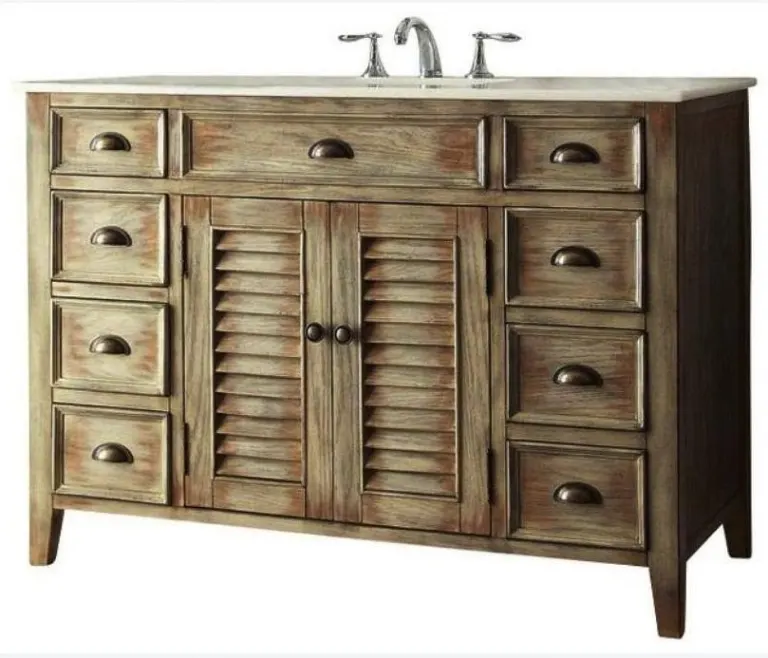
From boutique hospitality developers in London, New York, and Dubai importing custom white oak and thermo-treated ash vanities out of premier manufacturing clusters in Türkiye and Italy, to wholesale sanitaryware distributors consolidating container loads of solid timber bath furniture, executing the Import and Export of Solid Wood Bathroom Cabinets without customs delays, quarantine holds, or transit warping requires rigorous regulatory and engineering precision. This comprehensive technical guide details the exact HS tariff classifications, EUDR and Lacey Act timber traceability protocols, stone-and-ceramic basin bundling rules, and ocean-freight humidity safeguards governing the Import and Export of Solid Wood Bathroom Cabinets.
1. Global Trade Architecture of Solid Wood Bathroom Cabinetry
In cross-border construction supply chains, the Import and Export of Solid Wood Bathroom Cabinets follows a distinct value-added manufacturing model:
• Raw Timber & Hardware Sourcing: Export-oriented cabinetry manufacturers in hubs like Istanbul, İnegöl, Izmir, Milan, and Valencia source sustainably harvested European white oak (Quercus robur), American black walnut (Juglans nigra), and thermally modified ash (Fraxinus excelsior), pairing them with marine-grade AISI 304 stainless steel concealed hinges and full-extension runners from Austria and Germany (Blum, Hettich, Salice).
• Turnkey Wet-Zone Assembly: Unlike kitchen cabinets—which are frequently shipped flat-pack (RTA) due to large linear dimensions—solid wood bathroom vanities are predominantly exported rigid (factory pre-assembled), often bundled with integrated undermount porcelain basins, solid-surface troughs, or CNC-cut engineered quartz countertops.
2. Harmonized System (HS) Tariff Engineering and Composite Goods Rules
Accurate tariff classification is the cornerstone of the Import and Export of Solid Wood Bathroom Cabinets. Bathroom vanities do not fall under the kitchen furniture heading (9403.40); instead, customs authorities classify them under wooden bedroom/other furniture or specialized composite headings depending on how basins and countertops are packaged.
Primary WCO HS Codes for Solid Wood Bathroom Cabinetry
Product Configuration 6-Digit WCO HS Code National Tariff Subheadings (US / EU / Türkiye) Customs Classification Scope & Technical Notes
Solid Wood Bathroom Vanities & Linen Towers (Standalone) 9403.60 • USA (HTSUS): 9403.60.8081
• EU (CN): 9403.60.90
• Türkiye (GTİP): 9403.60.90.00.00 Floor-standing or wall-hung floating solid wood vanity cabinets, solid timber bath credenzas, and linen cabinets imported without stone/ceramic tops.
Solid Wood Vanity Bundled with Porcelain or Quartz Top 9403.60 (via GRI 3b) • USA (HTSUS): 9403.60.8081
• EU (CN): 9403.60.90 Under General Rule of Interpretation 3(b), a vanity packaged with its fitted sink top is classified by the component imparting essential character (the solid wood cabinet).
Standalone Ceramic / Porcelain Washbasins (Shipped Separately) 6910.10 • USA (HTSUS): 6910.10.0030
• EU (CN): 6910.10.00 Bulk-palletized vitreous china or fireclay undermount/vessel sinks shipped separately inside the same container must be invoiced under Chapter 69.
Standalone Quartz / Marble Vanity Tops (Shipped Separately) 6810.99 / 6802.91 • USA (HTSUS): 6810.99.0080 (Quartz)
• 6802.91.0500 (Marble) Unmounted stone vanity slabs with CNC sink cutouts shipped on separate A-frame crates require separate HS itemization.
Solid Wood Vanity Doors, Drawer Fronts & Frames 9403.91 • USA (HTSUS): 9403.91.0080
• EU (CN): 9403.91.00 Replacement five-piece solid hardwood shaker doors, solid dovetail drawer boxes, and wooden plinth frames.
Customs Valuation & Anti-Dumping Scrutiny
• United States Market Access: Solid wood bathroom vanities classified under HTSUS 9403.60.8081 originating from Türkiye, Italy, Spain, Germany, or Canada enter the United States at 0% Most-Favored-Nation (MFN) duty, completely exempt from the punitive Section 301 tariffs and Antidumping/Countervailing Duties (AD/CVD, ranging from 4.37% to 262%+) levied against Chinese-origin wooden cabinets and vanities.
• European Union & UK Preferential Access: Under the EU-Türkiye Customs Union (A.TR Movement Certificate) and the UK-Türkiye Free Trade Agreement (Origin Declaration / EUR.1), solid wood bathroom cabinets manufactured in Türkiye enter the EU and UK with 0% customs duty.
3. Timber Legality, Deforestation, and Phytosanitary Compliance
Because solid wood bathroom vanities utilize primary sawn hardwood timber, every cross-border transaction in the Import and Export of Solid Wood Bathroom Cabinets is governed by four strict environmental and biosecurity frameworks:
1. EU Deforestation Regulation (EUDR — Regulation (EU) 2023/1115)
Any operator placing solid wood bathroom cabinetry (HS 9403.60) onto the European Union market—or exporting it from the EU—must submit a digital Due Diligence Statement (DDS) containing:
• Verifiable polygon geolocation coordinates (latitude/longitude) of the exact forestry harvest plots where the oak, ash, or walnut timber originated.
• Proof of zero post-2020 deforestation and full compliance with harvest-country forestry laws, supported by FSC (Forest Stewardship Council) or PEFC Chain-of-Custody batch documentation.
2. U.S. Lacey Act Declarations (PPQ Form 505)
Importers bringing solid wood bathroom vanities into the United States must file an electronic Lacey Act Plant and Plant Product Declaration specifying:
• Exact Latin botanical genus and species (e.g., Quercus robur, Fraxinus excelsior, Juglans nigra).
• Country of timber harvest (distinct from the country of cabinet manufacture).
• Net wood volume in cubic meters or board feet and declared customs value.
3. CITES Endangered Species Verification
Manufacturers must avoid restricted tropical species (such as Burmese teak Tectona grandis from uncertified sources or Dalbergia rosewoods) unless accompanied by original CITES Export and Import Permits. Plantation-grown certified teak or thermally modified European ash provides identical wet-zone durability without CITES border risk.
4. ISPM-15 Phytosanitary Packaging & Biosecurity Standards
• All solid wood shipping pallets, crating battens, and container dunnage must be heat-treated (56°C core temperature for 30+ minutes) and bear legible ISPM-15 IPPC stamps.
• For shipments destined for Australia and New Zealand (DAFF biosecurity), exporters must provide a factory Kiln-Drying & Surface Coating Declaration confirming timber was dried below 14% moisture content and sealed with catalyzed polyurethane or UV oil.
4. Wet-Zone Structural Engineering for International Transit
A solid wood bathroom vanity engineered for domestic delivery can still fail during a 21- to 35-day ocean voyage if hygroscopic wood movement and wet-zone substrate standards are ignored during the Import and Export of Solid Wood Bathroom Cabinets:
1. Precision Kiln-Drying to 6%–8% EMC: Solid hardwood stiles, rails, and drawer boxes must be kiln-dried to 6%–8% Equilibrium Moisture Content (EMC) and stress-relieved prior to machining, verified via pinless dielectric moisture meters before packaging.
2. Phenolic Marine Plywood (Su Kontrası) Carcass Cores: While door frames and drawer boxes are solid hardwood, hidden vanity carcasses should be built from 18 mm–20 mm phenolic marine plywood (24-hour swelling ≤ 3%) or green-core HMR MDF (swelling ≤ 6%) to prevent structural distortion in humid destination climates (such as Florida, coastal UK, or the Arabian Gulf).
3. Expansion-Tolerant Floating Panel Joinery: Five-piece solid wood vanity doors must house floating center panels cushioned with elastomer Spaceballs inside 10 mm deep perimeter grooves so seasonal humidity swings never split mortise-and-tenon corner joints.
4. All-Surface Six-Sided Catalytic Sealing: Both interior and exterior wood surfaces—including U-shaped P-trap plumbing cutouts, bottom edges, and concealed hinge cup holes—must be sealed with two-component (2K) non-yellowing aliphatic acrylic-polyurethane or UV-cured industrial hardwax oil.
5. AISI 304 Marine-Grade Hardware: Specify stainless steel or marine-nickel concealed hinges (Blum Clip top Blumotion, Salice Silentia+) tested to EN ISO 9227 salt-spray corrosion standards so salty maritime air during ocean transit never initiates hinge oxidation.
5. Multi-Modal Packaging Engineering: Protecting Wood, Ceramic, and Stone
Shipping rigid solid wood bathroom cabinets alongside fragile porcelain sinks and natural marble or engineered quartz countertops requires specialized multi-tier crating:
Container Load Optimization (Rigid Pre-Assembled Vanities)
• 20ft Standard Container (28 CBM): Accommodates 14 to 18 complete solid wood bathroom vanities (widths 800 mm to 1400 mm) plus matching linen towers and mirrored cabinets.
• 40ft High Cube Container (68 CBM): Accommodates 32 to 44 complete solid wood bathroom vanities, depending on double-sink widths and countertop crating configuration.
Shock, Vibration, and Moisture Isolation Protocol
1. Individual Vapor-Barrier Bagging: Each finished solid wood vanity is wrapped in soft non-woven protective fleece followed by a heat-sealed 100-micron polyethylene vapor-barrier bag containing localized silica-gel desiccant sachets.
2. High-Density EPS/EPE Perimeter Armor: 30 mm–40 mm molded closed-cell foam corner blocks and edge channels isolate solid wood corners from lateral container vibration.
3. Separate A-Frame or Honeycomb Crating for Stone/Ceramic Tops: Heavy 20 mm–30 mm marble or quartz vanity tops and vitreous china basins are packed in dedicated foam-lined compartments above or beside the wooden cabinets—never resting loose inside unbraced drawers—to prevent point-load cracking during port crane handling.
4. Container Desiccant Poles: Suspend 12 to 16 industrial calcium chloride desiccant bags (1.5 kg–2 kg each) along the interior container walls to absorb moisture vapor and eliminate "container rain" condensation across ocean crossings.
6. Essential Export-Import Documentation & Quality Audit Checklist
To guarantee frictionless customs clearance and zero-defect job-site delivery in the Import and Export of Solid Wood Bathroom Cabinets, verify this complete pre-shipment checklist:
• Itemized Commercial Invoice & Packing List: Separates wooden vanities (HS 9403.60), standalone ceramic basins (HS 6910.10), and stone tops (HS 6810.99), listing exact net/gross weights, CBM volume, and Incoterms (FOB, CIF, or DDP).
• Origin & Preferential Duty Certificates: Official Certificate of Origin, A.TR (for EU-Türkiye), or EUR.1 / Statement on Origin (for UK/EFTA).
• Timber Traceability Package: Latin botanical species list, Lacey Act PPQ Form 505 data (for USA), EUDR Due Diligence Reference Number (for EU), and FSC/PEFC invoice claims.
• Third-Party Pre-Shipment Inspection (PSI): Independent verification by SGS, Bureau Veritas, or Intertek confirming 6%–8.5% timber moisture content, squareness tolerances (±0.5 mm), hardware corrosion grade, ISPM-15 pallet stamps, and inclusion of a 2%–3% spare hardware and batch-matched touch-up finish kit.