Global Market Entry Playbooks and Supplier Vetting Protocols: Mastering the Import and Export of Solid Wood Kitchen and Bathroom Cabinets in Türkiye
Expanding cross-border trade in bespoke architectural millwork requires aligning factory engineering with the distinct building codes, tariff defenses, and aesthetic expectations of destination continents. A solid wood kitchen specification engineered for a luxury high-rise in Riyadh will fail building inspections in Manhattan, just as a North American face-frame Shaker cabinet built with standard commercial veneers will be rejected at a German port if it lacks polygon-level deforestation traceability. Consequently, international procurement officers, real estate developers, and Turkish export executives must approach Global Market Entry Playbooks and Supplier Vetting Protocols: Mastering the Import and Export of Solid Wood Kitchen and Bathroom Cabinets in Türkiye through jurisdiction-specific regulatory and technical playbooks.
By 2026, shifting global supply chains—marked by North American tariff realignments against East Asian cabinetry, strict European environmental enforcement, and massive Giga-Project construction across Saudi Arabia and the UAE—have positioned Türkiye as a premier strategic manufacturing hub. However, capturing this commercial opportunity requires rigorous legal structuring, verified factory auditing, and precision compliance execution across every stage of Global Market Entry Playbooks and Supplier Vetting Protocols: Mastering the Import and Export of Solid Wood Kitchen and Bathroom Cabinets in Türkiye.
1. The North American Market Playbook (United States & Canada)
For Turkish cabinet manufacturers and North American importers, the United States and Canada represent the highest-volume growth frontier within Global Market Entry Playbooks and Supplier Vetting Protocols: Mastering the Import and Export of Solid Wood Kitchen and Bathroom Cabinets in Türkiye. US builders, multi-family developers, and kitchen dealers actively source from Türkiye to bypass the severe Anti-Dumping and Countervailing Duties (AD/CVD, often exceeding 200%) levied on Chinese wooden cabinets, while avoiding the circumvention investigations targeting Southeast Asian transshipment hubs.
US Customs Tariffs, Section 232/Reciprocal Duties, and Origin Rules
• Tariff Classification (9403.40.9060 & 9403.60.8081 HTSUS): Under the Harmonized Tariff Schedule of the United States, wooden kitchen cabinets enter under 9403.40.9060 and wooden bathroom vanities under 9403.60.8081. Importers must verify current US trade remedies—including baseline MFN duty rates (0%) alongside any applicable 2025/2026 presidential tariff proclamations on imported wooden cabinetry—prior to locking in fixed-price developer contracts.
• Substantial Transformation & Country of Origin: If a Turkish factory imports rough-sawn American White Oak or Black Walnut lumber (4407) into Türkiye, kiln-conditions, CNC-mills, mortises, assembles, and finishes the wood into kitchen cabinets (9403.40), US Customs and Border Protection (CBP) recognizes Türkiye as the legitimate Country of Origin under the substantial transformation rule. However, merely importing finished cabinet doors from Asia and screwing them onto Turkish boxes does not confer Turkish origin and exposes the US importer to CBP circumvention penalties.
North American Architectural & Testing Standards (KCMA & TSCA Title VI)
1. KCMA A161.1 Certification: Institutional multi-family developers and US housing authorities routinely mandate certification by the Kitchen Cabinet Manufacturers Association (KCMA) under standard ANSI/KCMA A161.1. Cabinets must survive rigorous laboratory endurance testing, including 25,000 door-swing cycles with 65-lb loads, 25,000 drawer-extension cycles loaded at 15 lbs per square foot, static shelf load tests (15 lbs/sq. ft. without deflection exceeding 1/16 inch), and 24-hour chemical exposure to vinegar, lemon juice, mustard, coffee, and 100-proof alcohol.
2. EPA TSCA Title VI & CARB Phase 2: Every carton and cabinet interior must bear a permanent compliance stamp stating the producer name, production lot date, and "TSCA Title VI Compliant", accompanied by Third-Party Certifier (TPC) chain-of-custody records for any composite plywood back panels or drawer bottoms.
3. Imperial Modular Sizing Conventions: Unlike European metric cabinetry (multiples of 150 mm or 200 mm), North American specs follow 3-inch imperial increments (widths from 9" to 42", base cabinet height 34.5" plus 1.5" countertop = 36" finished height, base depth 24", and wall cabinet depth 12" or 15").
2. The European Union & United Kingdom Market Playbook
Operating across the EU-27 and UK corridors within Global Market Entry Playbooks and Supplier Vetting Protocols: Mastering the Import and Export of Solid Wood Kitchen and Bathroom Cabinets in Türkiye hinges on tariff-free customs integration paired with uncompromising environmental and chemical documentation.
Customs Union Mechanics: A.TR vs. EUR.1
• EU-27 Exports (A.TR Movement Certificate): Under Decision No 1/95 of the EC-Türkiye Association Council, industrial goods—including solid wood kitchen and bathroom cabinets—in free circulation in Türkiye enter all 27 EU member states at 0% Customs Duty when accompanied by an electronically validated A.TR Movement Certificate. Critical Distinction: An A.TR certifies free circulation status within the Customs Union, not preferential origin. If the EU importer requires proof of Turkish origin for public procurement tenders or re-export, a Supplier’s Declaration must also be issued.
• United Kingdom Exports (EUR.1 / Origin Declaration): Following Brexit, trade between Türkiye and the UK is governed by the UK-Türkiye Free Trade Agreement. To qualify for 0% preferential tariff treatment upon entry into Felixstowe, London Gateway, or Southampton, the solid wood cabinets must satisfy the FTA’s Product-Specific Rules of Origin (PSR)—requiring that non-originating materials (e.g., imported American walnut lumber) undergo a tariff heading change (from HS 4407 to HS 9403) and remain below maximum non-originating value thresholds.
Mandatory EU Regulatory Filings (EUDR & REACH)
1. EU Deforestation Regulation (EUDR - Regulation (EU) 2023/1115): Before an EU customs broker can clear Turkish solid wood cabinets under HS 9403.40 or 9403.60, the EU operator must submit a Due Diligence Statement (DDS) into the EU Information System and record the generated DDS Reference Number on the customs import declaration. Turkish exporters must supply exact polygon geolocation coordinates of the forest parcels where the beech, oak, or chestnut trees were felled, paired with Turkish General Directorate of Forestry (OGM) harvest permits.
2. EU REACH Annex XVII Formaldehyde Ceiling: Effective August 2026, Regulation (EU) 2023/1464 enforces a strict chamber emission ceiling of 0.062 mg/m³ of formaldehyde for wood-based furniture articles placed on the EU market—cutting the legacy E1 limit nearly in half. Turkish exporters must test finished cabinetry assemblies in accredited European or TSE laboratories under EN 717-1 or EN 16516 to verify compliance.
3. European Metric Ergonomics: EU residential projects utilize 600 mm base cabinet depth (to align with standard 600 mm built-in European dishwashers, ovens, and induction hobs), plinth heights of 100 mm to 150 mm on adjustable heavy-duty ABS leveling legs, and handleless Gola aluminum profile or push-to-open Servo-Drive mechanisms.
3. The Gulf Cooperation Council (GCC) & Middle East Playbook
Saudi Arabia, the United Arab Emirates, Qatar, Kuwait, and Iraq collectively represent the fastest-growing luxury project corridor for Global Market Entry Playbooks and Supplier Vetting Protocols: Mastering the Import and Export of Solid Wood Kitchen and Bathroom Cabinets in Türkiye. Driven by Saudi Vision 2030 mega-developments (NEOM, Red Sea Global, Diriyah Gate, Roshn) and Dubai’s ultra-luxury branded villa market, GCC buyers prioritize grand architectural scale, exotic timber finishes, and climate-resilient engineering.
GCC Conformity Assessment & Port Clearance Mandates
• Saudi Arabia (SABER Platform & SFDA/SASO Technical Regulations): Every shipment of wooden kitchen and bathroom cabinets exported to Saudi Arabia must be registered on the SASO SABER electronic conformity portal prior to shipment. The exporter and Saudi importer must obtain a Product Certificate of Conformity (PCoC)—based on test reports verifying formaldehyde limits, heavy-metal safety, and structural stability—followed by a batch-specific Shipment Certificate of Conformity (SCoC) before goods arrive at Jeddah Islamic Port or King Abdulaziz Port (Dammam).
• Certificate of Origin Legalization: GCC customs authorities strictly require physical or e-apostilled Certificates of Origin certified by a Turkish Chamber of Commerce (İTO, BTSO, ASO) alongside commercial invoices itemized by HS code, net weight, and wood species.
Climate & Architectural Engineering for Gulf Villas
1. Thermal Shock & Air-Conditioning Stress: Exterior ambient temperatures in Riyadh or Dubai reach 50°C (122°F) during summer unloading at port terminals, while luxury villa interiors are cooled continuously to 20°C (68°F) with dehumidified air. To prevent glue-line delamination during transit and installation, Turkish exporters must specify heat-resistant reactive polyurethane (PUR) adhesives (thermal resistance up to 120°C) and pack containers with thermal reflective pallet liners and high-capacity desiccant poles.
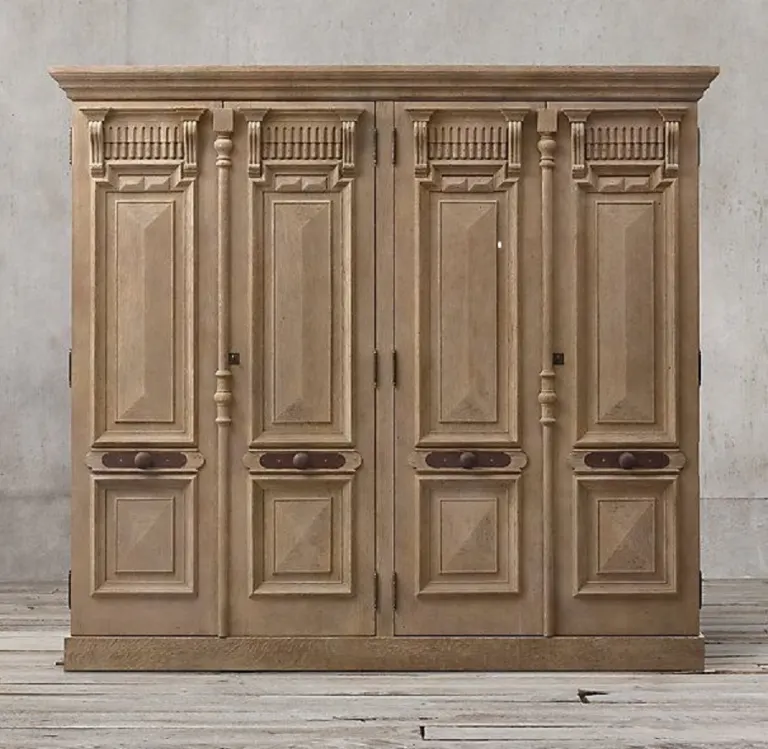
2. Dual-Kitchen Architectural Layouts: High-end GCC villas incorporate two distinct kitchens: a grand "Show Kitchen" (Mutfak) crafted from book-matched solid American walnut, smoked European oak, and fluted solid timber panels integrated with concealed Gaggenau appliances, paired with a heavy-duty "Dirty / Wet Kitchen" engineered from moisture-impervious thermally modified ash (Thermo-Ash) or marine-grade solid hardwood cores built to withstand intensive daily cooking, steam, and washdowns.
Destination Market Primary Tariff / Origin Instrument Mandatory Product & Environmental Standards Standard Dimensional System Dominant Aesthetic & Hardware Spec
United States & Canada MFN Duty + US Tariff Proclamations; Non-AD/CVD Turkish Origin EPA TSCA Title VI, CARB Phase 2, ANSI/KCMA A161.1, ISPM 15 Imperial (3" increments; 34.5" base height; 24" depth) Solid Shaker face-frame, dovetail maple drawers, concealed soft-close
European Union & UK A.TR (0% EU Customs Union); EUR.1 (0% UK FTA) EUDR Geolocation DDS, REACH (0.062 mg/m³), EN 14749, CE (if electrified) Metric (150 mm increments; 600 mm base depth; 100 mm plinth) Frameless handleless Gola profile, FSC solid European oak, Blum/Hettich
Saudi Arabia & GCC Chamber Certificate of Origin + SASO SABER (PCoC & SCoC) SASO Technical Regulations, High-Heat PUR Adhesives (120°C rated) Custom Architectural Metric + Grand Villa Proportions Book-matched solid walnut, classical carved beech, Thermo-Ash wet kitchens
4. Eight-Point Technical Due Diligence Checklist for Vetting Turkish Suppliers
For international buyers sourcing through Global Market Entry Playbooks and Supplier Vetting Protocols: Mastering the Import and Export of Solid Wood Kitchen and Bathroom Cabinets in Türkiye, distinguishing a genuine industrial manufacturer from a commission broker or under-equipped workshop prevents catastrophic project delays. Before issuing a purchase order or deposit, procurement teams should conduct an on-site or live-video technical audit across eight verification benchmarks:
1. Industrial Registry & Chamber Capacity Report (Kapasite Raporu): Request the factory’s official Sanayi Sicil Belgesi (Industrial Registry Certificate) and valid Chamber of Industry Capacity Report. This government-audited document lists exact factory square meterage, installed CNC horsepower, annual cubic-meter timber processing capacity, and registered engineering headcount.
2. In-House Kiln-Drying & Conditioning Infrastructure: Verify whether the factory operates its own computer-controlled dehumidification or vacuum drying kilns on-site and maintains a climate-controlled conditioning hall. Factories relying solely on third-party air-dried timber cannot guarantee 6%–8% moisture content stability.
3. Calibrated Hygrometer Audit: During factory inspection, use a calibrated pinless electromagnetic moisture meter (such as a Wagner Orion 950) to spot-check 20 random stacked timber blanks on the shop floor. Reject any facility where moisture readings vary by more than ±1.5% across boards.
4. Pressurized Positive-Pressure Finishing Booths: Inspect the finishing department. Export-grade 2K polyurethane and waterborne finishes require dust-free, positive-pressure spray booths with water-wash or dry-filter extraction and dedicated temperature-controlled curing ovens—not open-air warehouse spraying.
5. Valid Chain-of-Custody & Regulatory Certificates: Independently verify the supplier’s FSC or PEFC license code on the official online database (info.fsc.org), and inspect accredited third-party lab certificates for EPA TSCA Title VI and EN 717-1 / REACH compliance.
6. Hardware OEM Authorization: Confirm direct procurement relationships with authorized distributors of Blum, Hettich, Grass, or Salice to eliminate counterfeit slides or hinges on institutional projects.
7. In-House Engineering & Shop-Drawing Capability: Evaluate the technical office’s proficiency in AutoCAD, TopSolid’Wood, IMOS, or Cabinet Vision. A capable export engineering team produces detailed shop drawings showing wall elevations, section cutaways, MEP clash detection, and hardware drilling schedules within 5 to 7 business days.
8. Export Track Record & Exporters' Association Membership: Verify active membership in a regional Turkish Exporters' Association (such as İİB or OAİB) and request verifiable Bill of Lading references (with client names redacted if required) demonstrating prior container shipments to your destination region.
5. Essential Legal Clauses for International Cabinetry Purchase Contracts
To protect capital and delivery timelines in Global Market Entry Playbooks and Supplier Vetting Protocols: Mastering the Import and Export of Solid Wood Kitchen and Bathroom Cabinets in Türkiye, international sales agreements should be drafted under ICC Incoterms® 2020 and incorporate five specialized millwork clauses:
• Moisture Content & Acclimatization Warranty Clause: Explicitly define the mandatory kiln-dried moisture window at the time of container stuffing (e.g., 7.0% ±1.0% MC), measured via calibrated pinless hygrometer and recorded on the signed Pre-Shipment Inspection (PSI) report. Include mutual site-acclimatization protocols (e.g., HVAC operational at 35%–50% RH for 72 hours prior to uncrating) so warranty liability is clearly delineated between manufacturing defects and job-site water exposure.
• Natural Wood Grain & Color Tolerance Clause: Because solid wood is a natural organic material, define acceptable aesthetic parameters—specifically whether sapwood is permitted or excluded, allowable pin-knot diameter (e.g., zero knots > 3 mm on A-grade visible faces), and acceptable tonal variation matched against the signed Physical Golden Control Sample.
• Liquidated Damages for Delayed Container Loading: For multi-unit real estate and hotel openings tied to strict construction schedules, stipulate a transparent late-delivery penalty (typically 0.5% to 1.0% of the delayed batch value per week, capped at 5%–10%) triggered if container loading misses the agreed vessel cutoff date due to factory delay.
• Intellectual Property & Custom Moulding Exclusivity: Where an international kitchen brand supplies proprietary door-profile CAD files or custom router cutterheads, include an ironclad Non-Disclosure and Tooling Exclusivity Clause prohibiting the Turkish factory from manufacturing or marketing those specific profiles for third-party buyers.
• Dispute Resolution & Governing Law: Specify neutral international commercial arbitration—such as the Istanbul Arbitration Centre (ISTAC), ICC International Court of Arbitration, or LCIA—conducted in English, ensuring rapid, enforceable awards across borders.6. Frequently Asked Questions (Target Markets & Supplier Vetting)
Can Turkish solid wood kitchen cabinets enter the United States without paying the 200%+ Anti-Dumping duties applied to Chinese cabinets?
Yes. US Anti-Dumping and Countervailing Duties (AD/CVD) under Orders A-570-106 and C-570-107 apply specifically to wooden cabinets and vanities originating in the People's Republic of China (and verified transshipment circumvention schemes). Solid wood cabinets genuinely manufactured in Türkiye from raw timber and sheet goods undergo substantial transformation in Türkiye and enter the US as Turkish-origin goods, completely exempt from Chinese AD/CVD orders.
What document is required for Turkish solid wood cabinets to enter the European Union duty-free?
Exporters must issue an A.TR Movement Certificate, electronically approved via the Turkish Customs MEDOS system and endorsed at export clearance. Under the EU-Türkiye Customs Union, a valid A.TR grants 0% Customs Duty across all 27 EU member states, provided the EU importer also submits a compliant EUDR Due Diligence Statement proving deforestation-free timber sourcing.
What is the single most reliable way to verify if a Turkish cabinet supplier is a real manufacturer rather than a trading broker?
Request the company’s official Industrial Registry Certificate (Sanayi Sicil Belgesi) and Chamber of Industry Capacity Report (Kapasite Raporu). These state-issued documents legally certify the factory's physical production address, registered machinery park, kilowatt power capacity, and workforce size—documents a pure trading broker cannot obtain.
Why is SASO SABER registration mandatory when exporting Turkish bathroom vanities to Saudi Arabia?
Saudi Arabia’s Standards, Metrology and Quality Organization (SASO) enforces mandatory conformity assessment via the SABER digital platform for all imported wooden furniture. Without an active Product Certificate of Conformity (PCoC) and batch-specific Shipment Certificate of Conformity (SCoC) issued prior to vessel arrival, Saudi customs will block clearance and impose port demurrage fines.